
· by Michael Blair, Nashville's Remodeling
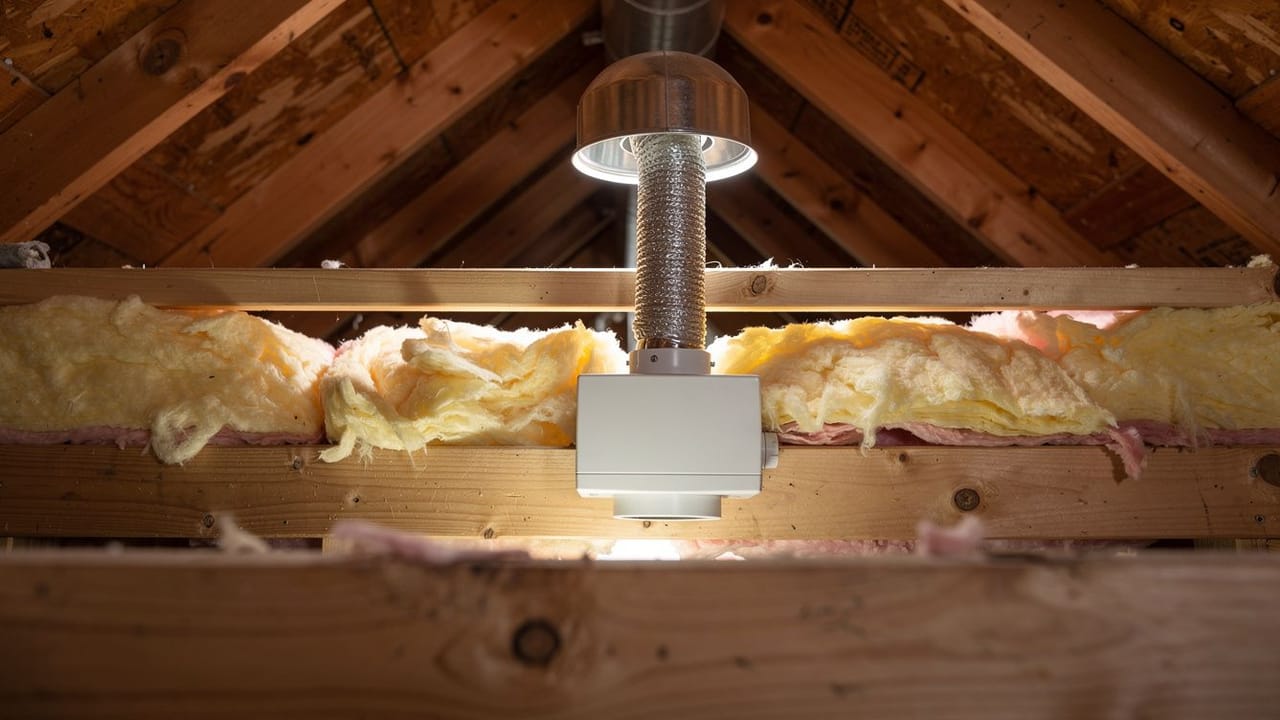
A bathroom fan is one of the cheapest parts of a remodel and one of the easiest to get wrong. The fan goes in the ceiling, but the moist air it pulls out has to go somewhere, and in some houses that somewhere turns out to be the attic floor. That moisture does not leave the house; it settles into the insulation and the roof deck. When we rebuild a bathroom on our kitchen and bath side, the fan and its duct are part of the plan from the start, and the rules below are why.
Where does a bathroom fan’s air have to go?
Outdoors, and nowhere else. Under the Nashville edition of the 2024 International Residential Code, Chapter 15, Section M1501.1, as published on UpCodes, the air removed by every mechanical exhaust system has to be discharged outdoors, and the code names the attic, a soffit, a ridge vent and the crawl space as places it may not go. The only exception in that section is for whole-house fans that are designed to push air into the attic, which a bathroom fan is not.
In practice that means a duct from the fan housing to a termination made for exhaust, through the roof or a gable or side wall. A duct that ends a few inches short of a soffit vent, or simply lies on the insulation, does not meet the rule even though the fan runs and the mirror clears.
How much air does a bathroom fan have to move?
At least 50 cubic feet per minute for a fan that runs when the room is used, or 20 cfm for one that runs continuously. Those figures come from Table M1505.5 in the same Chapter 15 of the Nashville edition, which sets kitchens at 100 and 25 for comparison. The code also wants the fan listed and labeled to a recognized airflow test standard, and it measures the listed rate at a quarter inch of water column static pressure.
That last detail matters more than it sounds. A fan is rated against a set amount of resistance, and a long, crushed or sagging duct adds more, so the box rating and the air actually leaving the house are not the same thing. A short, straight, smooth run to the outside is what lets the fan do what its label says.
Does a bathroom without a window need a fan?
Yes. Section R325.2 of the Nashville edition of the 2024 IRC asks for at least 3 square feet of window in a bathroom, half of it openable, unless the room has artificial light and a local exhaust system, and that exhaust goes directly outdoors. Older editions printed the same rule under a different section number, so a contractor quoting an older number is describing the same requirement.
Even with a window, a fan is the more dependable choice through a Middle Tennessee summer, when nobody opens the bathroom window during a shower. The EPA’s brief guide to mold and moisture recommends keeping indoor relative humidity below 60 percent, ideally between 30 and 50, running the bathroom fan or opening the window while showering, and adding ventilation where bathroom mold keeps coming back.
The permit for a new or moved bathroom fan
Metro Nashville’s Renovate a Single-Family Residence page lists an exhaust fan as needing a gas and mechanical permit, separate from the building permit. The same table lists a new or relocated plumbing fixture and relocated electrical fixtures, switches and outlets as permitted work, and the page says the permit is what brings the required inspections. A bathroom remodel that moves the toilet, adds a light and replaces the fan can touch three trades’ permits at once.
We pull those with the job, so the fan duct is inspected while the ceiling is still open. If the bathroom you are planning needs plumbing run where there is none, our post on adding a bathroom where there is no plumbing covers that side. For a bathroom in Hendersonville, Nashville or nearby, tell us about the room and we will look at where the fan can vent before anything else is drawn.
- Discharge outdoors only: never the attic, a soffit, a ridge vent or the crawl space
- At least 50 cfm intermittent or 20 cfm continuous
- A short, smooth duct to a proper exhaust termination
- A mechanical permit in Metro, inspected before the ceiling closes
Sources
- 2024 International Residential Code, Nashville edition, Chapter 15 Exhaust Systems (UpCodes) — M1501.1 outdoor discharge and the attic, soffit, ridge vent and crawl space prohibition; Table M1505.5 airflow; fan listing and rating pressure
- 2024 International Residential Code, Nashville edition, Chapter 3, R325.2 Bathrooms (UpCodes) — Window or artificial light plus local exhaust discharged directly outdoors
- Metro Nashville Codes, Renovate a Single-Family Residence — Permit table: exhaust fan needs a gas and mechanical permit; plumbing and electrical relocations permitted; permits bring inspections
- US EPA, A Brief Guide to Mold, Moisture and Your Home — Indoor humidity below 60 percent, ideally 30 to 50; run the bathroom fan while showering
FAQ
Where a Bathroom Exhaust Fan Has to Vent — questions
Can you vent a bathroom fan through the soffit?
Not under the 2024 International Residential Code as Metro Nashville has adopted it. Section M1501.1 lists a soffit, along with the attic, a ridge vent and the crawl space, as places exhaust air may not be discharged. The duct has to run to an exhaust termination through the roof or an outside wall.
How many cfm do I need for a bathroom exhaust fan?
The 2024 International Residential Code sets the minimum at 50 cubic feet per minute for a fan that runs while the room is in use, or 20 cfm for a fan that runs continuously. The rating is measured against a set duct resistance, so a long or crushed duct moves less air than the label.
Do you need a permit to replace a bathroom exhaust fan?
In Metro Nashville, the renovation permit table on the Codes Department site lists an exhaust fan as needing a gas and mechanical permit. Moving a plumbing fixture or electrical fixtures in the same bathroom adds those trades’ permits. Outside Metro, ask the city or county codes office before work starts.
Does a bathroom exhaust fan need to vent outside?
Yes. The code Metro Nashville has adopted requires the air from every mechanical exhaust system to be discharged outdoors, and a bathroom without a qualifying window has to have exhaust that goes directly outside. Air dumped into the attic leaves its moisture in the insulation and the roof deck.